
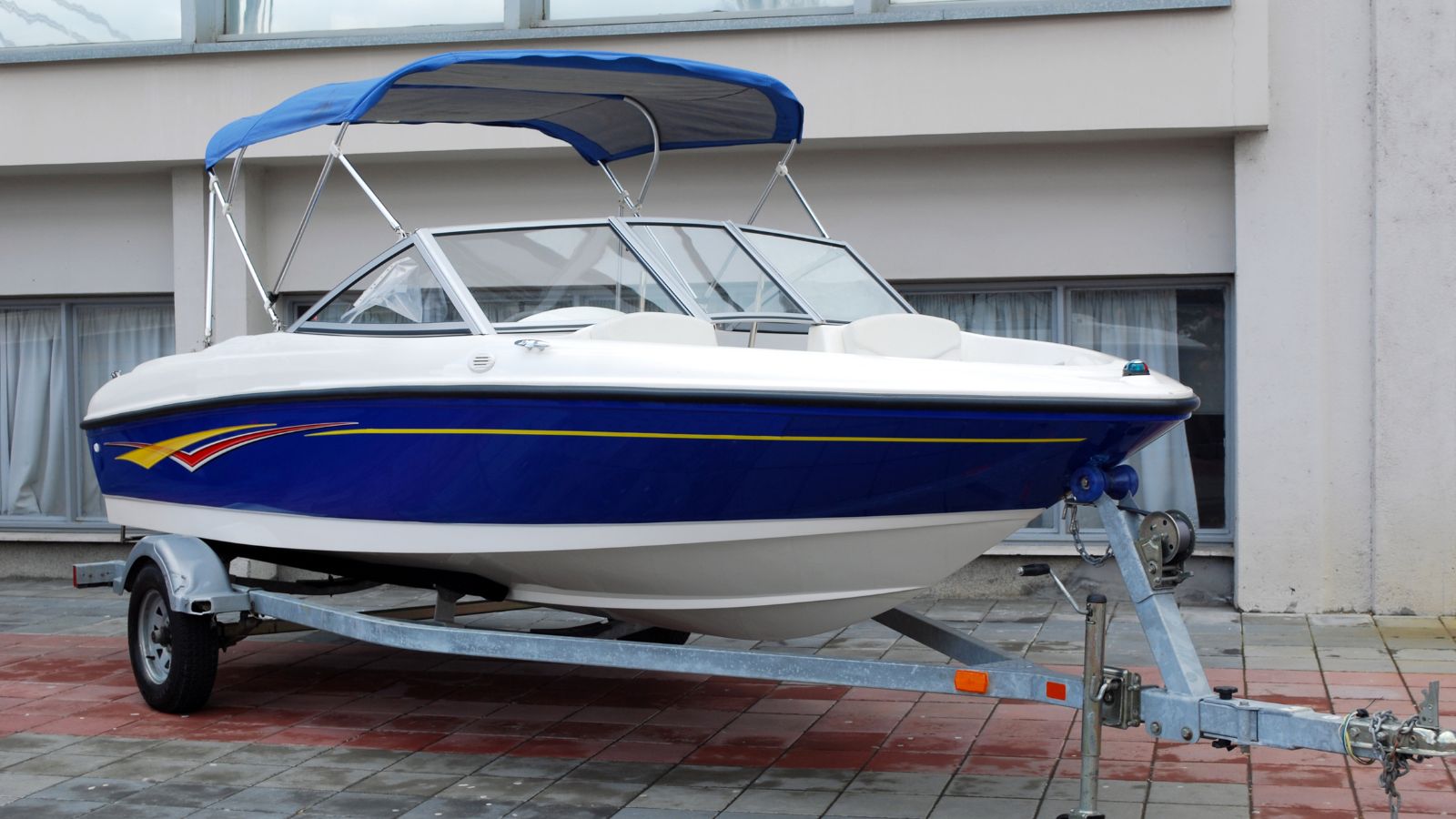
You may not always need a cash deposit to finance a boat in New Zealand. Whether no-deposit boat finance is available depends on the lender, the boat, the type of finance and your individual application. Contributing a deposit can still be useful because it reduces the amount you need to borrow, which can lower your repayments and the amount of interest charged over the loan. This guide explains how boat loan deposits work and what to consider before deciding how much of your own money to contribute.
Key takeaways
- ✓There is no universal deposit requirement that applies to every boat loan in New Zealand.
- ✓No-deposit boat finance may be available to approved borrowers depending on the lender and application.
- ✓A deposit reduces the amount you need to finance.
- ✓Borrowing less can reduce regular repayments and total interest costs.
- ✓A larger deposit does not guarantee approval or a particular interest rate.
- ✓Consider the other costs of owning a boat before putting all of your available savings into the deposit.
Do you need a deposit for a boat loan in NZ?
Not necessarily. Deposit requirements vary between lenders and finance products. Depending on the application, it may be possible to finance a boat without making a cash contribution upfront. In other cases, a lender may require a deposit or the borrower may choose to contribute one to reduce the amount financed.
There is no single minimum boat-loan deposit that applies to everyone. Whether you need one depends on the lender, finance structure, boat and your application.
How does a boat loan deposit work?
A deposit is money you contribute toward the boat purchase instead of financing the entire price. If a boat costs $50,000 and you contribute $10,000, the starting amount that needs to be financed is $40,000 before allowing for any fees or other financed costs.
How different deposits change the amount you need to finance
The immediate effect of a larger deposit is straightforward: you borrow less. The table below shows the difference on an example $50,000 boat purchase.
| Boat price | Deposit | Amount to finance |
|---|---|---|
| $50,000 | $0 | $50,000 |
| $50,000 | $2,500 | $47,500 |
| $50,000 | $5,000 | $45,000 |
| $50,000 | $10,000 | $40,000 |
| $50,000 | $15,000 | $35,000 |
| $50,000 | $20,000 | $30,000 |
How much can a boat deposit reduce repayments?
Because a deposit reduces the amount borrowed, it can also reduce the scheduled repayment when the interest rate and loan term remain the same. The examples below use an illustrative interest rate of 9.95% p.a. over five years. They exclude fees and are repayment examples only, not finance offers.
In this example, contributing $10,000 toward a $50,000 boat reduces the amount financed to $40,000 and lowers the indicative repayment because less money is being borrowed.
| Deposit on $50,000 boat | Amount financed | Example term | Approx. weekly repayment |
|---|---|---|---|
| $0 | $50,000 | 5 years | $244 |
| $5,000 | $45,000 | 5 years | $220 |
| $10,000 | $40,000 | 5 years | $195 |
| $15,000 | $35,000 | 5 years | $171 |
| $20,000 | $30,000 | 5 years | $147 |
Can you get no-deposit boat finance in NZ?
No-deposit finance may be available to approved borrowers, depending on the lender and the finance being considered. In a no-deposit purchase, the borrower does not contribute cash toward the purchase price upfront and therefore needs to finance more of the boat's cost.
No-deposit does not mean no cost. Financing more of the purchase price generally means a larger loan than you would have with a deposit.
What are the advantages of no-deposit boat finance?
The main advantage is keeping more cash available rather than committing a large amount to the purchase immediately. This can be particularly relevant with a boat because ownership can involve significant additional costs after the purchase.
| Potential advantage | Why it may matter |
|---|---|
| Keep savings available | Provides cash for other expenses or emergencies. |
| No large upfront contribution | You do not need to fund a substantial portion of the purchase immediately. |
| Keep money for ownership costs | Boats can require insurance, fuel, servicing, storage and equipment. |
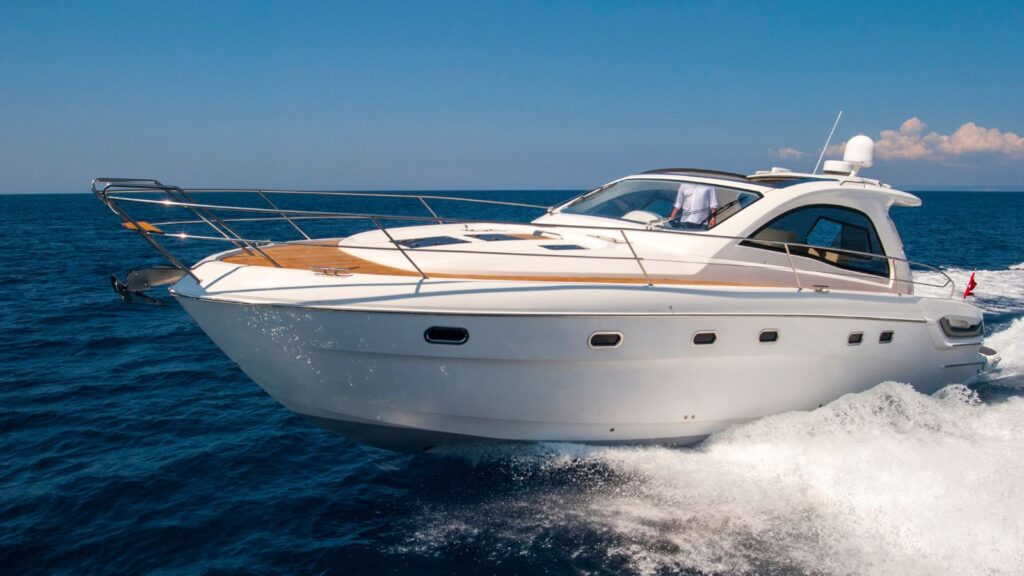
What are the disadvantages of financing a boat with no deposit?
The main trade-off is borrowing more. A larger loan generally means larger repayments and more interest if the rate and term remain the same. You may also have less equity in the boat at the beginning of the loan.
| No-deposit consideration | Potential effect |
|---|---|
| Higher amount financed | More of the boat price needs to be borrowed. |
| Larger repayments | Borrowing more generally increases scheduled repayments. |
| More interest | A larger balance can result in more interest over the same term. |
| Less initial equity | You have contributed less of your own money to the purchase. |
Is a 10% deposit enough for a boat?
There is no universal 10% deposit requirement for boat finance. A 10% contribution simply reduces the amount you need to borrow by one tenth of the purchase price. On a $50,000 boat, a 10% deposit is $5,000, leaving $45,000 to finance before fees or other financed costs.
A 10% deposit can reduce your loan, but it does not guarantee approval or a particular interest rate.
What about a 20% boat deposit?
A 20% contribution reduces the amount financed further. On a $50,000 purchase, 20% is $10,000, leaving $40,000 to finance before other costs. Whether contributing that much makes sense depends on your available savings, the finance terms and the other costs you expect after buying the boat.
Does a bigger deposit get you a lower boat loan rate?
Not automatically. A deposit changes the amount you need to finance and can be relevant to the overall application, but interest rates depend on multiple factors. These can include the lender, security, credit history, loan amount, term and borrower circumstances.
Do not assume a particular deposit percentage guarantees a particular rate. Compare the actual finance options available to you.
Does a deposit make boat finance easier to get?
A deposit can strengthen some applications because the borrower is financing less of the purchase price, but approval still depends on the lender's assessment. Income, expenses, existing debts, credit history, the boat and the proposed finance can all be relevant.
Can an existing boat be used as a trade-in?
If a dealer accepts your existing boat as a trade-in, its net value can reduce the amount you need to fund for the replacement boat. The important number is the equity in the existing boat rather than simply its trade-in price.
What if you still owe money on your current boat?
If finance remains owing, compare the current loan settlement amount with the trade-in or sale value. For example, a $20,000 trade-in is not equivalent to a $20,000 deposit if $12,000 is still required to settle the existing finance.
| Example | Amount |
|---|---|
| Trade-in value | $20,000 |
| Existing finance settlement | $12,000 |
| Remaining equity | $8,000 |
Should you use all your savings as a boat deposit?
Reducing the amount borrowed can lower finance costs, but using all of your available cash can leave little room for unexpected expenses. Boats can require spending soon after purchase, particularly if maintenance, safety equipment or storage arrangements are needed.
A bigger deposit can reduce your loan, but keeping an appropriate cash buffer can also be important.
Remember the costs beyond the boat purchase
The purchase price is only one part of boat ownership. Before deciding how much cash to put into a deposit, consider the expenses you may need to cover after taking ownership.
| Potential ownership cost | Examples |
|---|---|
| Insurance | Cover for the boat, equipment and relevant risks |
| Fuel | Petrol or diesel depending on the vessel |
| Servicing | Engine and mechanical maintenance |
| Repairs | Unexpected mechanical, electrical or hull work |
| Storage | Marina berth, dry stack, yard or other storage |
| Trailer costs | Maintenance, tyres and WOF/registration where applicable |
| Safety equipment | Lifejackets and other required or recommended equipment |
Deposit vs keeping cash available
There is a trade-off between reducing debt and preserving liquidity. Putting more money into the purchase reduces the amount financed, while keeping more cash available gives you a larger buffer for ownership costs and unexpected expenses. The right balance depends on your circumstances.
How to compare different boat deposit amounts
Before deciding, compare several scenarios using the same boat price. Look at how each deposit changes the loan amount and repayment, then consider how much savings you would have left.
| Question | Why it matters |
|---|---|
| How much will I finance? | Shows how much debt remains after the deposit. |
| What will the repayment be? | Helps determine whether the loan fits your budget. |
| How much interest could I pay? | Borrowing less can reduce total interest. |
| How much cash will I have left? | Important for emergencies and boat ownership costs. |
| What rate and fees apply? | The complete finance cost matters, not just the deposit. |
What should you check before paying a boat deposit?
Make sure you understand what the payment represents. Money contributed toward the purchase price and a payment made to a seller to secure a transaction can have different contractual consequences. Check the sale agreement, any refund conditions and whether finance approval is required before committing money.
Compare boat finance with and without a deposit
If you have cash available for a deposit, comparing more than one scenario can show whether using that money meaningfully improves the finance for you. EveryLoan refers visitors to Simplify Finance, where applications, lender matching, credit decisions and funding are handled by Simplify Finance and its lender partners.
EveryLoan is not a lender. Deposit requirements, rates, approval and loan terms depend on the lender, finance product and individual application.
Frequently asked questions
Not always. Deposit requirements vary between lenders and applications, and no-deposit boat finance may be available to some approved borrowers.
Potentially. Whether no-deposit finance is available depends on the lender, the boat, the finance product and your individual application.
There is no universal percentage that suits everyone. Compare how different deposit amounts affect the amount financed, repayments and your remaining savings.
There is no universal 10% requirement. A 10% contribution reduces the amount financed, but the lender determines whether a particular application meets its requirements.
Generally, yes. If the interest rate and term remain the same, reducing the amount borrowed through a larger deposit will reduce the scheduled repayment.
Not necessarily. A deposit can be relevant to the application, but the rate also depends on the lender, security, credit profile, loan structure and other circumstances.
A dealer may allow a trade-in value to be applied toward the replacement boat. If finance is still owing on the existing boat, the settlement amount needs to be deducted to determine the equity available.
Consider how much cash you will need after the purchase. Boat ownership can involve insurance, fuel, servicing, repairs, storage, trailers and safety equipment, so retaining a financial buffer can be useful.